Program
Next Gen Baker
Enter our world of craftsmanship, innovation and the future of baking!
Key Facts
Location
Avenhorn en Stoutenburg
Duration
17 Class days (1 day every 2 weeks)
Starts
January 2027
Level
Post-secondary (MBO+)
The program in a nutshell
Dreaming of a career that will let you use your hands and your head? Where tradition and innovation go hand in hand and where you grow every day as a professional and as a human being? At Amarant Academy, we’ll train you to become the baker of tomorrow. In our own part-time post-secondary program, you’ll learn the intricacies of the craft, the latest techniques and sustainable methods while honing your personal leadership skills. Whether your dream is a perfect loaf of sourdough or an ideal industrial production line, we’ll teach you how to bake the future. Here’s how to make your talent rise!
What will you learn?

Knowledge: Gain insight into the properties and purposes of ingredients and learn how to recognize, evaluate and guarantee product quality. You’ll build a solid foundation in safety and hygiene and learn how to follow food safety principles.
Skills: Learn practical skills that you can only develop on the job. You’ll learn to independently manage production processes, prepare various bread products and assess end products for quality and consistency.
Personal: Receive close guidance and learn customer-oriented thinking and effective cooperation. We’ll also help you strengthen your communication and team skills, so you can grow into a responsible, quality-conscious professional.
Practical information
The Next-Gen Baker program is a hands-on, one-year part-time post-secondary (MBO+) program. In addition to the assignments in the bakery, you’ll spend part of each module shadowing an expert in the field. Among other things, you will get a look behind the scenes at a grain mill and various bakeries.
Admission requirements
You don’t have to be a baker before starting this program – what matters is that you’re motivated. That’s why we ask applicants to submit a cover letter or video explaining why they’re interested and why they deserve this opportunity. The next step is a talent scan, in which we map out your personality and capabilities. In personal interview, we’ll assess whether this program is right for you and whether you might be one of our new students!
The program is taught in English, so a good command of the English language is essential. To complete the practical assignments, you’ll have to work at an industrial bakery at the start of the program. Make sure you have time and space to work on your assignments at this workplace and that you have a supervisor or coach at the bakery who can help you.
Diploma
This program is recognized by the CPION as a part-time post-secondary program. You‘ll receive an official diploma upon completing the program demonstrating your mastery of the baking profession.
Modules
The program consists of several modules, each of which consists of two practical teaching days. So you’ll even learn theory in practice! We organize excursions and guest lectures, you will receive independent assignments to complete at home, as well as practical assignments to carry out in the bakery. Below is a brief summary of what to expect from each module.
Module 1 - Knowledge of raw materials and their applications
What’s really inside that delicious-smelling, golden-colored loaf? We’ll start literally at the source with a visit to a grain mill. Because true baking expertise begins with the basics and those basics must, of course, be solid! In this module, we’ll dive into the world of grain, flour, yeast, and sourdough. You’ll learn not only what these ingredients are, but above all why they’re so essential for the perfect loaf. We’ll show you how water is the secret weapon and why the soil in which grain grows is just as important as the baker who works with it. You’ll learn to analyze, understand, and skillfully use raw materials to take your baking results to the next level.
Module 2 - Artisanal baking
Roll up your sleeves and put some love into the dough
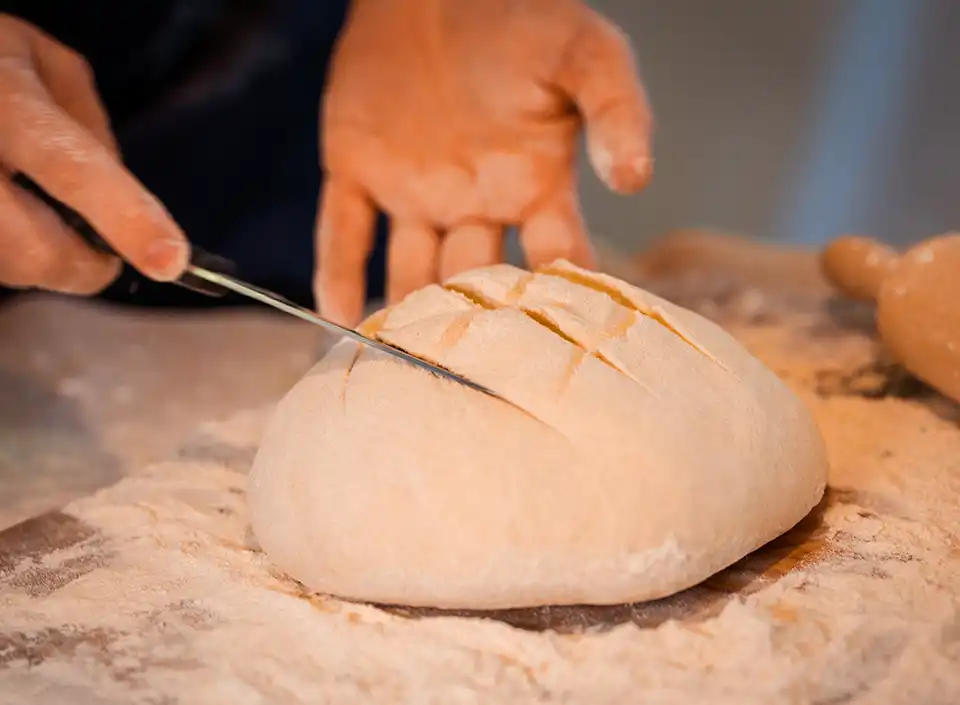
Are you getting excited yet? In this module, you’ll learn to bake just like the bakers of old: kneading, shaping, and letting the dough rise, all by hand! Not because we’re nostalgic, but because you can only truly understand what dough needs when you feel it, smell it, and see it work. You’ll learn to engage all your senses, why kneading is crucial for a supple dough, and how proofing determines the flavor and texture. By paying attention to every detail, you’ll discover that a little love in the dough makes a world of difference. This artisanal foundation will help you stand out even in the most modern bakery. After this module, you’ll take home a bag full of delicious homemade bread.
Module 3 - Modern industrial production
Big machines, great flavors
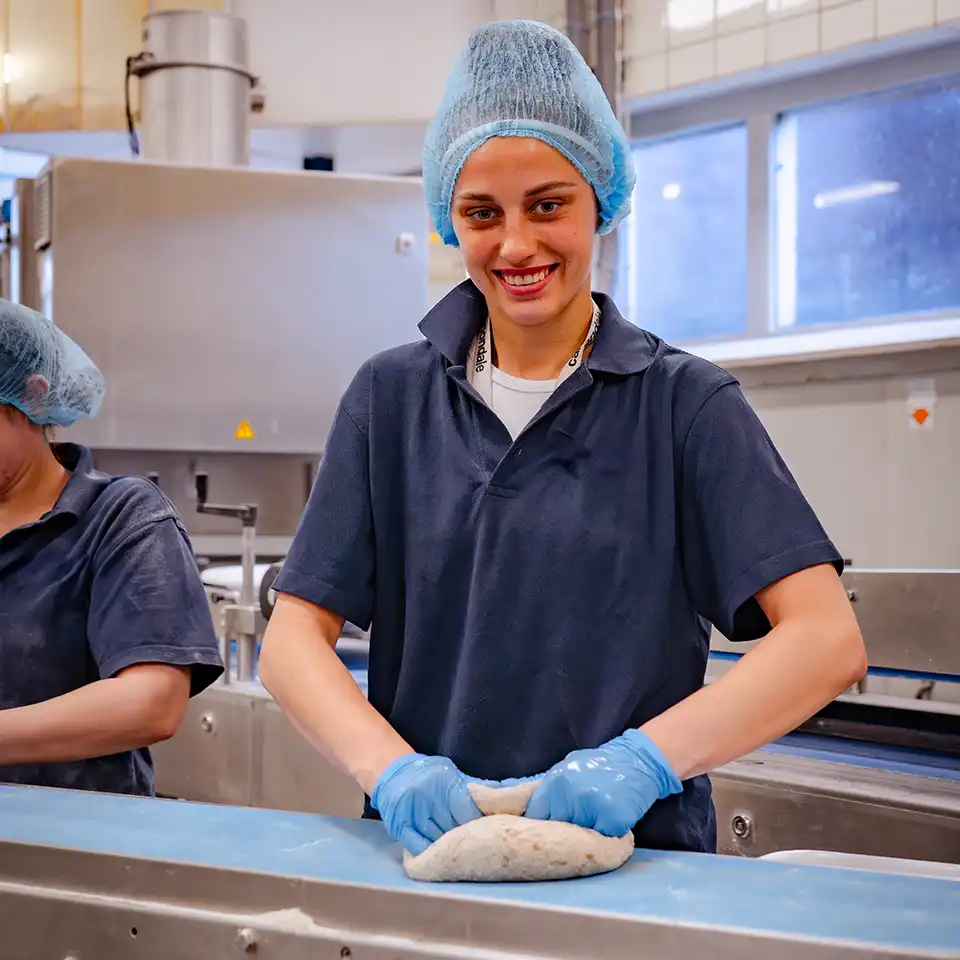
How do you get machines to replicate the artisanal feel of handmade bread? In this module, you’ll learn the secret: knowledge, insight, and a feel for the process. We’ll take you on a tour of state-of-the-art production lines where tradition and technology go hand in hand. You’ll learn how to operate and fine-tune the machines and handle the dough as if it were kneaded by human hands. Because bread remains a natural product (especially when you work with sourdough!), you’ll also learn to manage factors like humidity and temperature. You’ll become the kind of baker who doesn’t just press buttons, but truly understands what’s happening in the mixing bowl. You’ll work with machines and learn to understand, operate, and improve industrial processes. In these modules, we’ll also actually step into the bakery; you’ll see, hear, and feel what each machine does to the dough.
In this and the previous module, we’ll also examine the bread: what was the desired outcome, and what is the actual result? How did this happen, and why? What needs to be changed in the process to achieve the desired result? Evaluating bread just like real bakers do.
After these three modules, you will present the first part of your portfolio. What have you learned, what surprised you, and how can you apply this knowledge in your work?
Module 4 - (Food) safety in the bakery
Working safely and enjoyably = safe, delicious bread
In the bakery, it’s not just about delicious products, but also about working safely and enjoyably. This module teaches you everything about food safety, hygiene (such as HACCP), and machine safety. You’ll learn about the regulations governing food production, so you’ll know exactly how to prevent foodborne illnesses. But you’ll also learn to identify potential hazards and risks in the production process and how to use the machines we work with in the bakery safely and responsibly. And you’ll learn how to ensure your bread is of the highest quality, free from ingredients that don’t belong in bread and could damage the company’s reputation.
But this module also covers social safety: how do you set boundaries, and how do you foster a positive atmosphere in the workplace? How do you address colleagues in a dangerous situation or if you notice they’re struggling mentally? We’ll teach you how to stay strong—not just physically, but mentally as well. Because a safe and healthy baker bakes the best bread!
Module 5 - Process optimization & collaboration
Smarter baking, less waste
Why make things difficult when you can do them smarter? In this module, you’ll learn the ins and outs of LEAN practices: how to prevent waste, improve processes, and minimize errors. You’ll discover how the individual links in the production chain are interconnected and why even small improvements make a big difference. We’ll also cover KPIs (Key Performance Indicators) metrics that will help you take your bakery to the next level. You’ll become that smart baker who not only pays attention to what happens to the loaves but also understands how everything comes together on the shop floor.
You’ll analyze a problem and/or process at your own workplace; this is the starting point for your final project. How does this problem arise, and what can be done to optimize or resolve this process? You’ll develop an action plan, and over the coming weeks, you’ll consult with your supervisor, colleagues, and fellow students to develop an improvement plan.
Module 6 - Corporate social responsibility
Stronger together, more successful together
A good bakery isn’t just about baking great bread; it’s also about taking responsibility for consumers, the environment, and the future of the trade. What does that mean in practice? Customers are setting increasingly high standards for quality, safety, sustainability, and transparency. That’s why it’s important to know what certifications exist and what they say about a product or company.
In addition, sustainability is playing an increasingly important role. How do you ensure that we’ll still be able to make bread a hundred years from now? What do we mean by sustainable business practices? What does B Corp certification mean, and why are more and more companies choosing it? And when can you actually call a loaf of bread organic?
By delving into these topics, you’ll not only learn how to bake the best bread but also how to make conscious choices that benefit people, the environment, and society. This way, you’ll not only be able to demonstrate your craftsmanship but also inspire your colleagues to work together to get a little better every day.
Module 7 - Processing & presenting bake-off products
From the oven to the bread board: the complete picture
What happens to your delicious products after they leave the bakery? In this module, you’ll learn how bake-off products are finished and presented in the store. We’ll step into the customer’s shoes for a moment: what are they looking for? Convenience, healthy eating, enjoyment and, of course, a good price. You’ll learn how to make tasty, artisanal products for all consumers and how to respond to market trends and preferences. This module also covers how to showcase product quality: properly baked products, knowledge of allergens, and accurate label information. As a Next Gen Baker, you’ll have the whole picture at your fingertips.
Module 8 - Personal leadership
Grow with your talent
This module runs like a thread through the entire program. Of course, it’s all about expanding your professional knowledge, but your personal development is just as important. Through homework assignments, presentations, and hands-on lessons, you’ll be challenged to become not only a better baker but also a stronger professional. You’ll learn to collaborate with colleagues, present to a group, give and receive constructive feedback, and speak confidently about your work and your ideas. These are skills that will serve you well not only in the bakery but throughout your entire career.
Toward the end of the program, this topic receives special attention. After all, a good baker stands out not only through craftsmanship but also through personal leadership. Through coaching, reflection, and practical assignments, you’ll discover your own style of collaborating, communicating, and growing. We challenge you to become stronger, more confident, and more resilient, both on the job and beyond. Your personal development is central to the program, because when you know yourself well, you can inspire others and achieve great results together.
On the second-to-last day of class, the focus is entirely on your own creativity. You’ll make, knead, and bake your own bread roll. Will you choose a classic favorite, a beloved snack, or a concept you’ve come up with entirely on your own? Anything is possible. On this day, you’ll also have a one-on-one conversation about your progress during the program, and we’ll discuss the final components of your portfolio.
Final presentation & graduation ceremony
The harvest of your efforts
The final day of the program marks the festive conclusion of your learning journey. You’ll present your optimization project and portfolio to fellow students, instructors, and invited guests. Colleagues, friends, and family are also warmly welcome to celebrate this special milestone with you. After a group lunch where, of course, you’ll enjoy the homemade sandwiches, the official graduation ceremony will take place.
If you’ve completed all assignments with a passing grade, you’ll receive an official CPION-certified diploma, a valuable recognition of your dedication, growth, and expertise. Of course, we’ll wrap up the day in festive style and reflect on everything you’ve accomplished.
The story doesn’t end there. A few months after graduation, we’ll come together again, not just for the fun of it, but also to share experiences and discuss how your optimization plans are coming along. We’ll also put on our aprons again and bake bread together. Because no matter how wonderful personal development, innovation, and knowledge may be, in the end, there’s one thing that connects us all: the joy of creating something beautiful with your own hands and enjoying it together.
Teachers
All our teachers are pure professionals. They work in the field themselves – in the bakery, as consultants or as business owners – and leverage their experience for their teaching. That way, everything you learn is closely aligned with everyday practice. They know what you are up against, but also where you can grow.
Questions or need help?
Get in touch!
Whether you want to knead the perfect dough, streamline your processes, or take your skills to the next level: we’ll teach you how. Together, we’ll continue to grow, with respect for the craft and a focus on innovation and sustainability. Want to know more?